

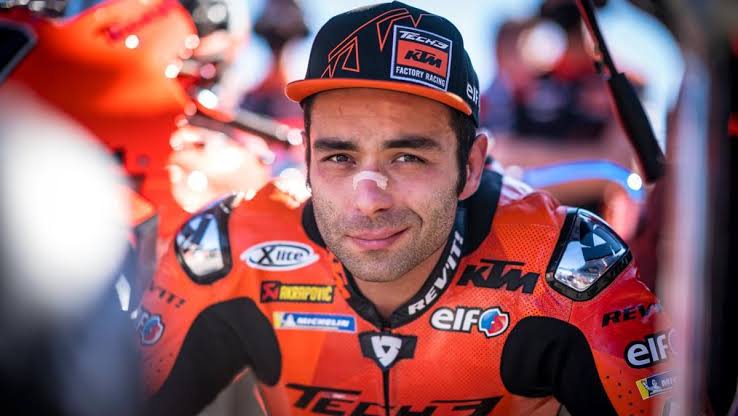
Safety has once again become a major talking point in MotoGP after Danilo Petrucci raised concerns about the extremely high speeds riders can reach before entering the first corner. The former MotoGP rider, who now competes in WorldSBK, believes some circuits have characteristics that make race starts increasingly dangerous as motorcycle performance continues to improve.
One of the tracks receiving the most attention is the Circuit de Barcelona-Catalunya. According to Petrucci, MotoGP bikes can approach Turn 1 at close to 300 km/h. At those speeds, even a small braking mistake can have serious consequences, especially on the opening lap when the entire field is still tightly grouped together.
Zarco Incident Revives Safety Debate
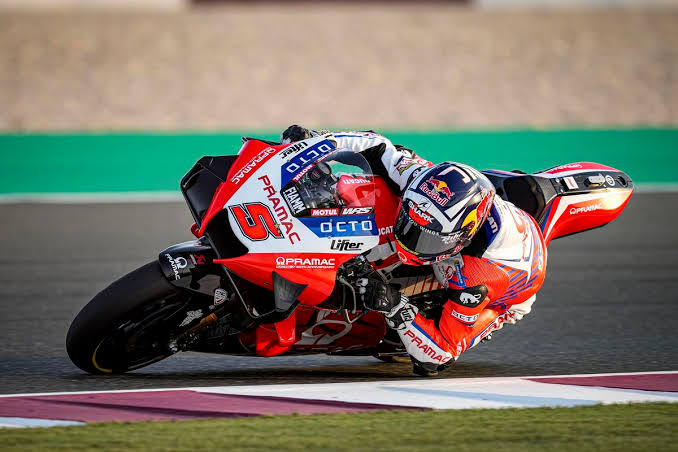
The issue gained further attention after Johann Zarco was involved in a crash during the 2026 Catalan Grand Prix.
The Barcelona race featured several dramatic moments and multiple restarts. During one of them, Zarco was involved in an incident at Turn 1 together with Francesco Bagnaia and Luca Marini.
The crash resulted in another red flag, while Zarco was taken for medical checks after suffering an injury to his left leg. Further examinations later confirmed damage around his knee area and a small fracture near the lower part of the fibula.
The accident once again highlighted how quickly things can go wrong when several MotoGP bikes reach the first braking zone at very high speed.
Petrucci Suggests Moving the Starting Grid
Petrucci has proposed a relatively simple solution. He believes the starting grid at Barcelona could be moved closer to Turn 1, while the finish line remains in its current position.
The idea is to shorten the distance riders have available to accelerate once the lights go out.
With a shorter run toward the opening corner, the bikes would theoretically reach a lower top speed before entering the braking zone. That could reduce the severity of incidents caused by missed braking points or contact between riders.
Importantly, the proposal would not require a major redesign of the circuit. The main adjustment would involve repositioning the starting grid while maintaining the rest of the track layout.
Barcelona’s First Corner Creates a Unique Challenge
Petrucci also compared Barcelona with Mugello, another circuit known for an extremely fast straight before Turn 1.
Both tracks allow MotoGP machinery to reach very high speeds. However, Petrucci believes Mugello offers more space and alternative lines when riders make a mistake under braking.
Barcelona can be more difficult because the ideal racing line into Turn 1 is narrower and the field often arrives there in a large group.
The issue has become even more relevant as MotoGP bikes continue to become faster. Modern aerodynamic systems, improved electronics, and more advanced launch technology allow riders to accelerate harder than ever before.
Ride-Height Devices Also Under Scrutiny
Petrucci also mentioned ride-height devices, which help motorcycles accelerate more effectively during starts and corner exits.
These systems lower parts of the motorcycle and improve stability under acceleration. The result is stronger drive and higher speed over relatively short distances.
While the technology has contributed to better performance, it also means riders may reach the opening corner faster than in previous generations.
MotoGP has already planned technical changes for 2027, including the removal of certain ride-height and holeshot systems under the new regulations.
Those changes form part of a broader effort to reduce complexity and improve racing safety.
MotoGP Continues to Evaluate Safety Measures
MotoGP officials have repeatedly stressed that safety remains an ongoing process rather than something that can be solved with one regulation.
After the incidents in Barcelona, several possibilities have been discussed. These include larger gaps between grid positions, improved protection around motorcycle wheels, warning systems for technical failures, and further changes to launch-related devices.
Petrucci’s suggestion adds another possible solution to that discussion.
Instead of reducing engine performance, changing the position of the starting grid could address the problem by limiting how much speed riders build before Turn 1.
Finding the Balance Between Speed and Safety
MotoGP has always been defined by speed, technology, and competition. However, faster motorcycles also create new challenges for riders, teams, and circuit designers.
Modern MotoGP machines are capable of reaching extraordinary speeds, but race organizers must ensure that track layouts and safety systems continue to evolve alongside them.
Petrucci’s proposal may not become an official rule, but it raises an important question about whether some circuits should adapt to the performance of current-generation motorcycles.
Moving the Barcelona starting grid closer to Turn 1 would be a relatively small change compared with major circuit reconstruction. If it can reduce the speed of the entire field during one of the most dangerous moments of a race, the idea could deserve serious consideration.
For MotoGP, the challenge remains clear: continue pushing technological limits while ensuring riders are given the safest possible environment in which to compete.



More Stories
MotoGP San Marino 2026 Memanas, Marquez Mulai Tekan Jorge Martin
Fermin Aldeguer Joins VR46 for MotoGP 2027 and 2028
Fermin Aldeguer Targets MotoGP Return at Aragón After Injury